
Results measured in the live operation, not claimed in a slide deck.
Most AI pilots never reach the P&L. These did.
Three workflows, three numbers, each measured after go-live against where the client started.
The workflows we rebuilt, and what moved.
Named where the client cleared it, described where they did not. Each card opens the full story: where each client started, what we changed, what the number did.













Telecommunications
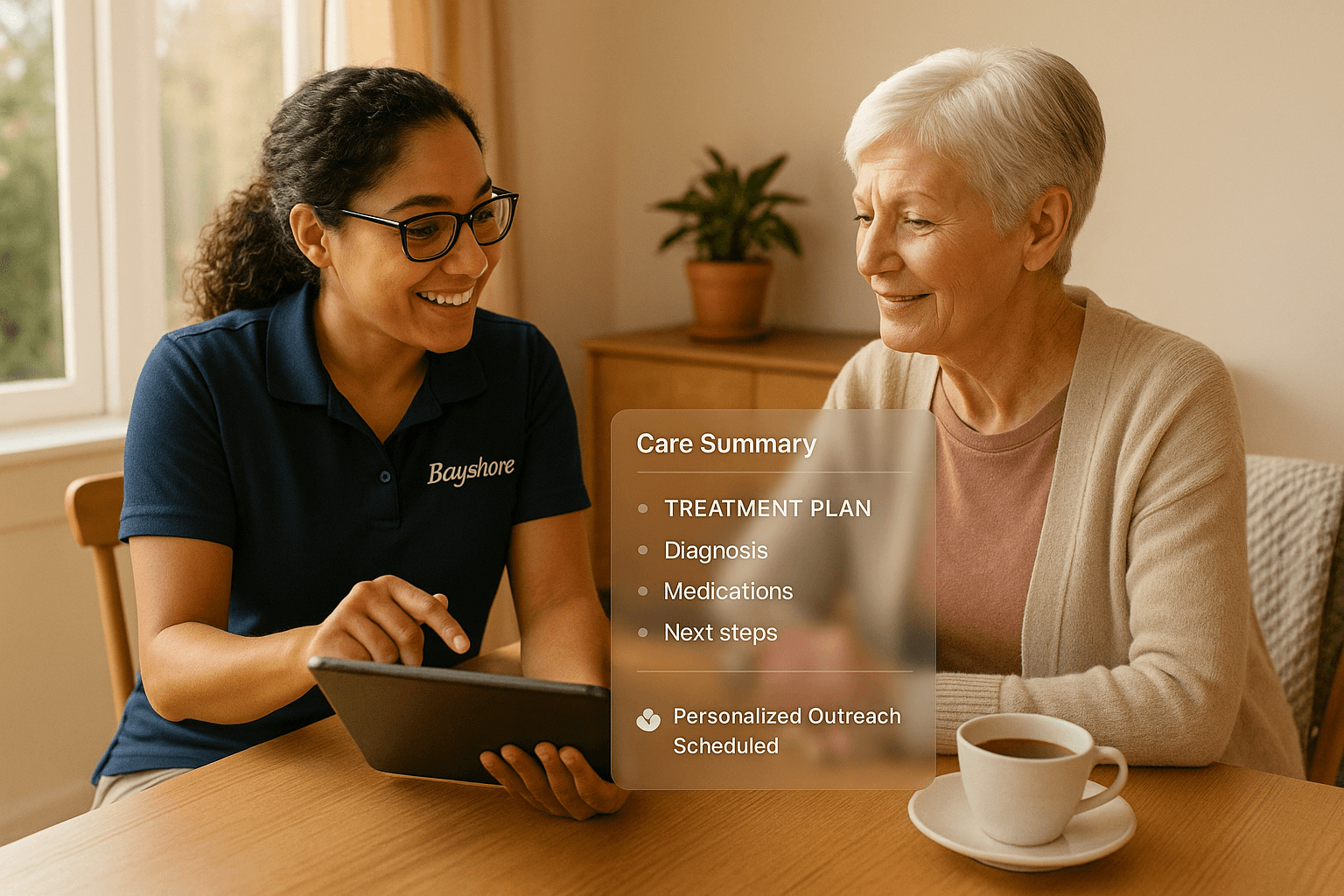
Customer service workflow
Tier 1 North American provider
Measured in the live operation against where things stood before.
faster resolution
Before
A request comes in. The agent works out what the customer wants, then searches several systems and documents for the answer. How fast it gets resolved depends on who picked up.
What changed
Requests now arrive sorted and routed, with the answer pulled from the client's own systems and a link back to the source. Agents stopped switching between screens.
Result
35% faster resolution. Fewer escalations, more consistent answers, new agents productive sooner.
Logistics
Document & decision workflow
National logistics operator
Measured in the live operation against where things stood before.
faster document and approval completion
Before
Contracts and operational documents arrived in volume. Every one was read, checked and keyed by hand, then passed through several approval stages, each with its own handoff. Time-sensitive decisions waited.
What changed
The system reads each document, pulls out the fields that matter, applies the business rules and sends the file to the right decision maker. One connected flow replaced the handoffs.
Result
Documents and approvals completed 60% faster. Shorter approval chains, fewer processing errors, faster decisions.
Internal operations
Knowledge workflows
Multi-division enterprise operator
Measured in the live operation against where things stood before.
faster information retrieval
Before
Frontline teams answered recurring operational questions by searching several internal systems, one inquiry at a time. The same question got different answers depending on who was asked and how long they had been there.
What changed
Search by meaning, built into the frontline workflow, returns an answer grounded in the client's own data with the source cited. A standing check keeps the answers current.
Result
Information found 3x faster. More consistent service across teams, less dependence on long-tenured staff, lighter training for new hires.
Architech provided the engineering capabilities to transform our emergency expertise into a responsive, AI voice-guided, step-by-step experience. Together, we redesigned key elements of the triage process around how people respond in real emergencies, helping users take potentially lifesaving action. Architech worked as a true partner, and their engineering and process mapping expertise is exceptional.
Architech has been our strategic partner on the journey to redefine our telecom offerings in the digital age. Their dedication, expertise, and commitment to our vision have made the impossible possible.
Architech always comes to the table with the right expertise to solve problems. One of the best engineering firms I have worked with in Canada.
The redeveloped TOPS platform enabled our frontline team to access important information from the field, and make better, real-time operational decisions to optimize our business and improve efficiencies.
Architech has always been a partner and an extension of the Roto-Rooter team. They are passionate about their work and strive to produce the best end result, and on time.
Every number here was measured the same way.
Before we change anything, we record where the workflow stands. We set the target on the business number the work is meant to move, not on a model score. After go-live we measure again, in the systems your teams already use, and keep measuring. Redesigning the work removes steps, so the same job finishes faster.
The reporting structure every engagement uses
| Metric | Start | Target | Actual |
|---|---|---|---|
| Resolution time | 18.5 min | 13.0 min | 12.0 min |
| Escalation rate | 27% | 20% | 19% |
| Handling time | 14.0 min | 11.5 min | 10.9 min |
What is the status quo costing you?
Pick the workflow that matters most and set the sliders to how the work runs. Every figure is built from your own numbers, not our projections.
No savings promises. A structural read on how much of one workflow's annual cost sits in the steps AI typically touches.
Built entirely from your own numbers. The diagnostic later opens pre-filled with what you set here, so nothing is asked twice.
What you get
- A dollar figure for what one workflow costs to run for a year, at your settings
- The cost of waiting, projected over the months until you act
- The share of that cost sitting in the steps AI typically touches: sorting, routing, looking things up, and drafting
- A one-page summary you can download and forward to a CFO or CEO
- A direct hand-off into the diagnostic, pre-filled with what you set