

35%faster resolution
Customer service workflow
At a Tier 1 North American provider. AI reads each request on arrival, routes it, and attaches the context the agent needs to resolve it.
See real resultsOne process in your operation costs more time or money than it should. Architech rebuilds it with AI, runs it live, and measures the change against the numbers you track today.
A complimentary half-day workshop for executive teams. It starts with a free 30-minute call.
Senior designers and engineers rebuild the workflow around how your people work. The routine steps move to AI. The calls that matter stay with your team.
Components, data sets, templates, and connectors carry from one engagement to the next. We call them our accelerators. You feel them as a faster build and a lower price.
A workflow running in your operation and measured against your own numbers, not a pilot in a sandbox.
Architech is a Canadian AI workflow redesign and engineering firm, founded in 2004. For our clients we find where AI pays, clean up the data, ensure security, build the AI solutions that transform how work gets done, and drive the adoption that captures the value. Every organization below is a client we have built for. The three results that follow come from workflows rebuilt with AI.
%3Aformat(webp)&w=256&q=75)
%3Aformat(webp)&w=256&q=75)
%3Aformat(webp)&w=256&q=75)
%3Aformat(webp)&w=256&q=75)
%3Aformat(webp)&w=256&q=75)
%3Aformat(webp)&w=256&q=75)
%3Aformat(webp)&w=256&q=75)
%3Aformat(webp)&w=256&q=75)
%3Aformat(webp)&w=256&q=75)
%3Aformat(webp)&w=256&q=75)
%3Aformat(webp)&w=256&q=75)
%3Aformat(webp)&w=256&q=75)
%3Aformat(webp)&w=256&q=75)
%3Aformat(webp)&w=256&q=75)
%3Aformat(webp)&w=256&q=75)
%3Aformat(webp)&w=256&q=75)
%3Aformat(webp)&w=256&q=75)
%3Aformat(webp)&w=256&q=75)
%3Aformat(webp)&w=256&q=75)
%3Aformat(webp)&w=256&q=75)
%3Aformat(webp)&w=256&q=75)
%3Aformat(webp)&w=256&q=75)
%3Aformat(webp)&w=256&q=75)
%3Aformat(webp)&w=256&q=75)
%3Aformat(webp)&w=256&q=75)
%3Aformat(webp)&w=256&q=75)
%3Aformat(webp)&w=256&q=75)
%3Aformat(webp)&w=256&q=75)
%3Aformat(webp)&w=256&q=75)
%3Aformat(webp)&w=256&q=75)
%3Aformat(webp)&w=256&q=75)
%3Aformat(webp)&w=256&q=75)
%3Aformat(webp)&w=256&q=75)
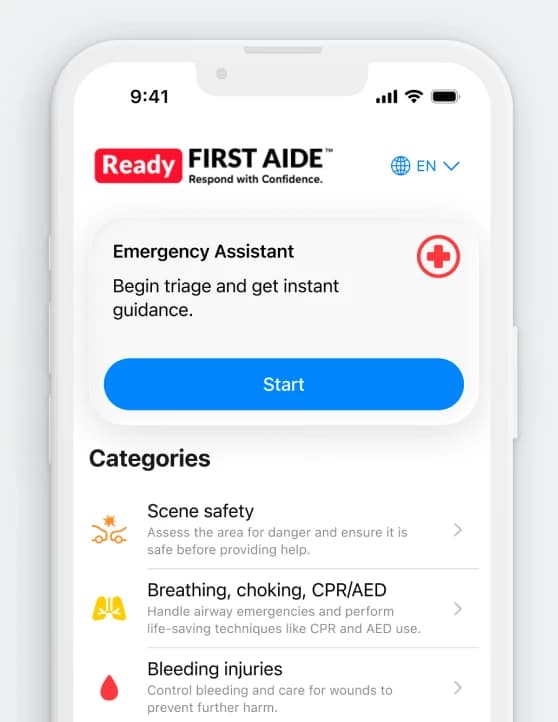
Architech turned our emergency expertise into a responsive, AI voice-guided experience, redesigning the triage process around how people actually respond in real emergencies to help them take potentially lifesaving action. Ready FIRST AIDE is only the beginning in our partnership.
At a Tier 1 North American provider. AI reads each request on arrival, routes it, and attaches the context the agent needs to resolve it.
See real resultsAt a national logistics operator. AI pulls the fields from each document, checks them against the rules, and routes the decision to the right person.
See real resultsAt a multi-division enterprise operator. Frontline staff ask one question and get the answer from every system, with a link back to the source.
See real resultsThe three results above are from three separate engagements. Those clients are not named. Engagement-specific detail is available on request.
A complimentary half-day workshop for your executive team. 10 to 20 workflows go on the wall and come out as your top three, each with a business case and roadmap with costs. Workflows worth doing, not the simple automations your staff can set up themselves.
No fee3 to 4 hoursUp to six executives
Before AI touches your systems, prove how it reaches your data safely. The AI Foundations Blueprint is step one, bought once and reused by every workflow after it. It ends in a go/no-go and a priced plan for any gaps.
Fixed fee from $9,9002-3 weeks
In two weeks we shadow the people who do the work, write down what it costs today and build the business case. You leave with the plan, your starting numbers and the Build's fixed price. If you do not accept it, you do not pay.
2 weeksFrom $9,900 CADAcceptance Guarantee
An agent, a copilot or an automation your people use every day, built into the systems you already run and measured against your numbers. Every one is a workflow with a number on it, so the price comes from a two-week Blueprint.
Fixed feePriced by the BlueprintWeeks, 90 days at most
Seven industries where we have rebuilt the work. A look at the everyday tasks AI takes on in each, the ones that cost you time and money.
Work that looks the same across finance, HR, and legal:
There's a full technical architecture behind this.See the architecture
Tell us the part of your operation you want to improve and what is driving it now. We come back with where AI can deliver measurable impact and how we would sequence the work.
Measured live in your operation: 35% faster resolution, documents and approvals completed 60% faster, 3x faster information retrieval.
No. Many engagements start exactly there. The AI Jumpstart is built for it: a complimentary half-day workshop where your executive team ranks the workflows worth rebuilding with AI. You do not need an AI team, a data strategy, or a pilot behind you. You need one workflow worth improving and the people who know how it runs today.
No hiring, and yes, we build. Architech brings the AI engineering, and the same small team carries the work from first scope to running live in your operation. Your side supplies the people who know the work. That is a sponsor, the executives in the workshop, and the owner of each workflow we build a case for.
Operationally complex mid-market and lower-enterprise organizations across Canada and the United States. Most often in telecommunications, logistics, senior living, financial services, home services, professional services and technology. Headquartered in Toronto, with teams across Canada, in Poland, and across Latin America. Work is remote-first.
Yes, for the right workflow. Most AI projects never prove their impact, yet AI is already producing measured results running live. Three of those results are published on this page, each from one workflow in one operation. The difference is not the technology. It is picking a workflow whose impact can be measured, then measuring it. Every engagement starts there.
No. You need a safe way for AI to reach your systems, designed as part of the work. The AI Foundations Blueprint does it in 2-3 weeks. Identity, access, audit trail, and data residency are scoped explicitly and proven against your real operational data. That becomes the AI Reference Architecture every later workflow reuses, and it ends in a go/no-go and a priced plan for any gaps.
Each step is time-boxed. The AI Jumpstart: a half day with your executive team, an hour per top workflow owner, then a virtual readout within one to two weeks. Transformation Blueprint: 2 weeks, ending with the plan, your starting numbers, and the Build's fixed price. The Build: simple workflows live in weeks, complex ones within 90 days. Most organizations see their first measured result within 5-7 weeks of the Blueprint's start.
Against the business number you care about: cost per resolution, time to close, whatever we agreed. Not how the AI scores on its own. With the people who know the work, we build a test set of real cases and the right answer for each. We re-run it on a schedule, adding any slip so it cannot come back. Drops in quality are caught before your P&L sees them.
No. Each step stands on its own, and you decide at the end of each whether to continue. The Jumpstart is complimentary and optional: if you already know your workflow, start at the Transformation Blueprint. The Blueprint and the Build are committed separately, and nothing moves to the Build without your sign-off. The AI Foundations Blueprint is step one, and skipped where your data and security are already ready.
The AI Jumpstart workshop is complimentary. The paid entry points are fixed-scope: Transformation Blueprint from $9,900, AI Foundations Blueprint from $9,900. The Transformation Blueprint carries the Acceptance Guarantee: criteria agreed in Week 1, no fee if the outcomes are not accepted. The Build is a fixed fee set by the Transformation Blueprint. Activation is a per-workflow monthly retainer from $2,500/month. Prices in Canadian dollars, excluding HST. Full details on the Pricing page.
Most AI projects miss their KPIs by month six. Outcome Assurance is the discipline that prevents it. We keep measuring against your number, and we grow the test set as the work grows, so past problems cannot come back. One team stays accountable for that number, month after month.