
Unifying Fragmented Healthcare Coordination into a Single Platform
Fragmented care coordination workflows across 100+ locations and 13,000+ employees consolidated into a single digital platform - enabling online scheduling, real-time communication, and unified care management.
The Challenge
Care coordination fragmented across 100+ locations with no unified digital platform
Practitioners, patients, caregivers, and families had no seamless way to communicate
Appointment scheduling and management was manual and location-dependent
No remote care management capability across the geographically dispersed operation
350,000+ clients and 13,000+ employees with inconsistent access to care information
Five distinct regional operations each with different coordination workflows
Approach
Redesigned the care coordination workflow around a single connected platform
Conducted discovery sessions to identify common pain points across all stakeholder groups
Designed for four distinct user types: practitioners, patients, caregivers, and families
Built interactive scheduling and appointment management into the unified workflow
Integrated wellness resources and communication tools into a single experience
Deployed five region-specific configurations from a single platform architecture
What Was Delivered
Single unified platform replacing fragmented coordination across 100+ locations
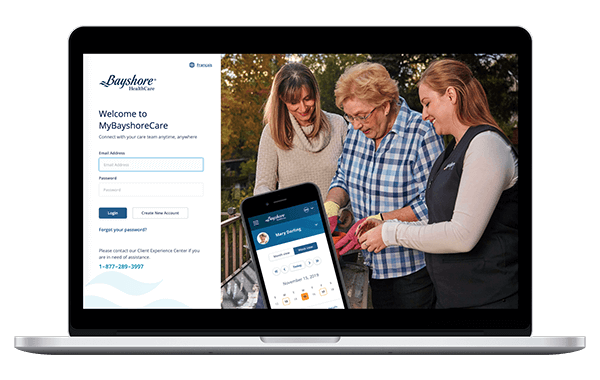
Online booking and appointment management accessible to all stakeholders
Real-time communication between practitioners, patients, and families
Wellness resources integrated into the care coordination workflow
Five region-specific deployments from one platform architecture
Voice activation capabilities for accessibility
Business Impact
Concept to production deployment in 3 months
Care coordination unified across 100+ locations for the first time
Stakeholder experience measurably improved across practitioners and care recipients
Remote care management enabled across the geographically dispersed operation
Foundation established for data-driven care optimization - unified data on scheduling, communication, and outcomes
Platform designed for independent expansion - template model enables new regions without rebuilds
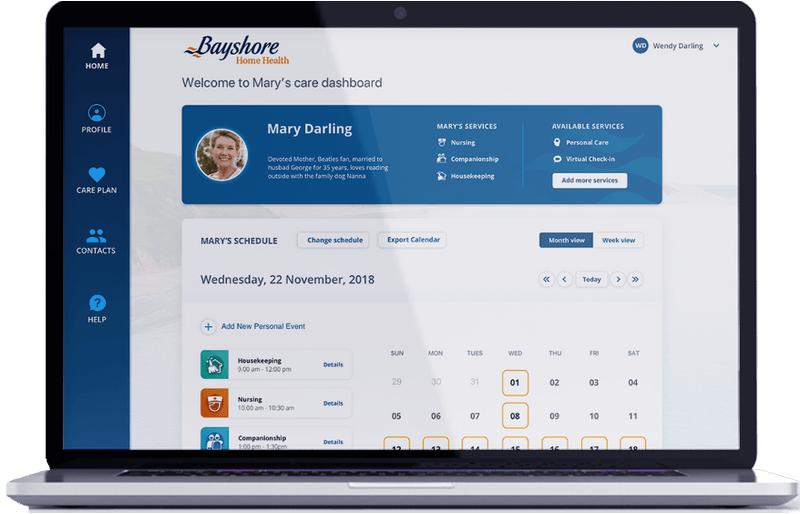
Cloud-native web application - E-commerce integration - Voice activation - Multi-region deployment
Architech always comes to the table with good expertise, the right expertise, to solve problems. I consider Architech to be one of the best engineering firms I have worked with in Canada.
Frequently asked questions
- How does workflow redesign improve healthcare coordination?
- Healthcare coordination fails when information and scheduling are fragmented across locations and systems. Practitioners, patients, and families each interact with different tools, creating gaps in communication and care continuity. Redesigning the workflow means all stakeholders operate from a single platform - scheduling, communication, and care information flow seamlessly.
- Can healthcare platforms be deployed quickly without compromising quality?
- Yes, when the platform architecture is designed for configuration rather than customization. This deployment went from concept to production in 3 months by building a single platform that supports region-specific configuration - not five separate builds. Speed comes from structural decisions, not shortcuts.
- What is the role of discovery in healthcare workflow redesign?
- Healthcare workflows involve multiple stakeholder groups with different needs - practitioners, patients, caregivers, administrators. Discovery identifies the common pain points and coordination gaps across all groups, ensuring the redesigned workflow serves everyone rather than optimizing for one group at the expense of others.
Related industry
AI for Senior Living